



When procurement leaders talk about digital transformation, cost models often sound like a solved problem. But here’s the reality: a model is only as valuable as the confidence it inspires when stakes are high. If you can’t prove accuracy where it matters most, every negotiation becomes a debate about assumptions instead of a discussion about value.
That’s why this next case matters. In bakery goods, complexity isn’t just about the number of materials—it’s about the diversity of recipes, semi-finished components, and supplier cost structures. For this global manufacturer, the question wasn’t “Do we have cost models?” It was: “Can we trust them enough to steer multimillion-euro decisions?”.
The Challenge: Managing Confidence in Cost Models
Operating across multiple production sites and sourcing a wide variety of ingredients and semi-finished materials, the manufacturer relies on cost models to validate supplier pricing and support negotiations. However, as procurement complexity increased, the procurement team faced several critical challenges:
- Limited visibility into cost model accuracy: Without a systematic comparison between historical prices paid and predicted market prices, the team lacked a clear view of how accurately cost models reflected reality.
- Unclear commercial relevance of deviations: Model inaccuracies appeared across the portfolio, but there was no way to distinguish minor deviations from issues with meaningful financial impact.
- Lack of prioritization across materials: Without linking accuracy to spend, the team struggled to identify which cost models required immediate attention and which posed limited commercial risk.
This made it difficult for procurement teams to confidently stand behind cost models in high-stakes commercial discussions.
The Solution: AI-Powered Cost Model Accuracy and Market Intelligence
Predikt deployed its AI-powered cost modeling platform to assess cost model accuracy by combining market intelligence, cost model predictions and historical procurement data. Historical actual prices per kilogram were systematically compared against market prices predicted by each cost model, creating a consistent and transparent accuracy metric across materials and time periods.
In addition, Predikt enabled procurement teams to analyze accuracy at material, category, and portfolio level, and to relate model performance directly to spend exposure.
The Outcome: A Clear and Quantified view of cost model performance
1. What the Procurement Team Could Observe
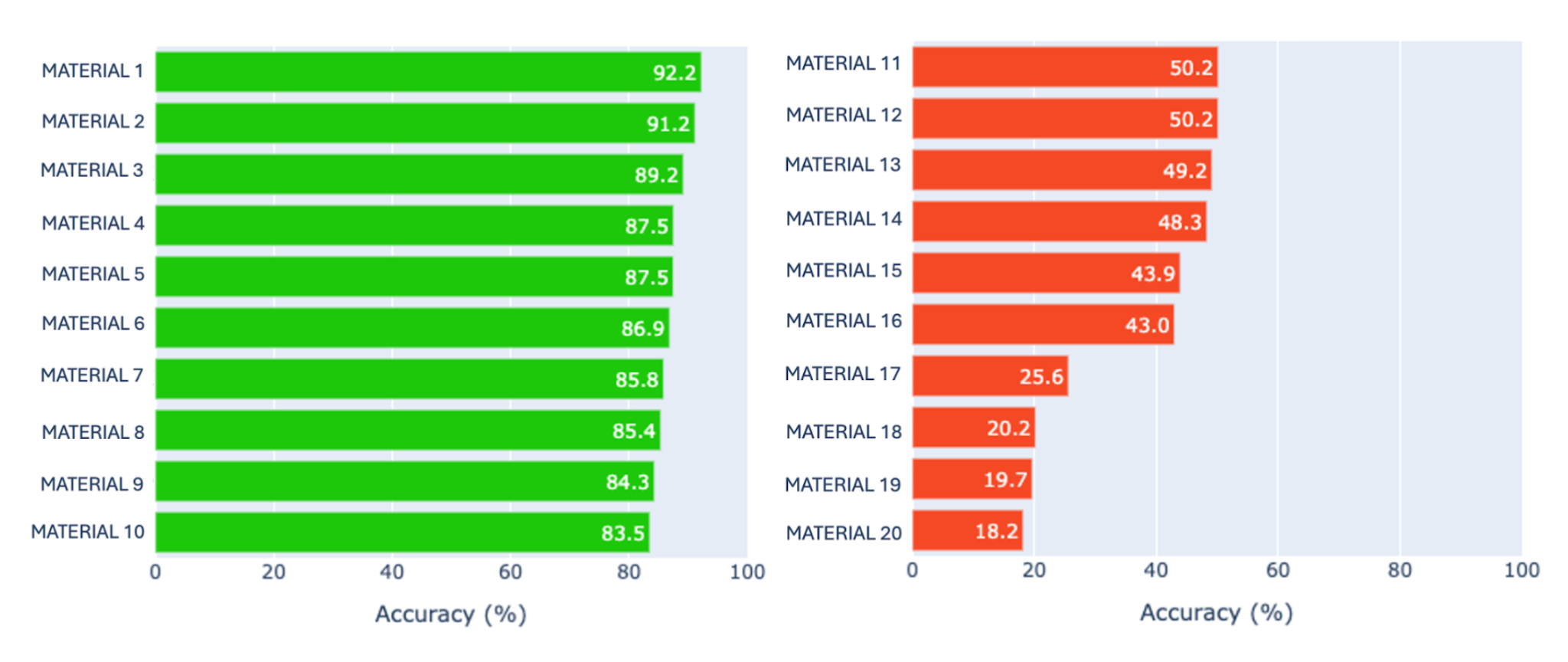
By using Predikt’s solution, the procurement team gained, for the first time, a clear and quantified view of cost model performance across its material landscape. The analysis showed that many core materials were supported by highly accurate cost models, with top-performing models achieving accuracy levels above 85–90%, and the most accurate exceeding 92%. See Graph 1: Best and worst cost models.
This confirmed that cost models underpinning key procurement decisions were closely aligned with real supplier pricing behavior, reinforcing confidence in their use.
Graph 1: Best and worst cost models.
2. Understanding Where and Why Accuracy Deviates
The analysis also revealed a limited number of materials with substantially lower accuracy, in some cases around 20%. Rather than indicating systemic issues, these deviations pointed to specific, explainable factors, including:
- Recipe assumptions that differed from supplier formulations
- Input indicators that did not fully reflect supplier purchasing conditions
- Conversion or logistics cost assumptions that diverged from operational reality
Viewing these deviations across the full portfolio allowed procurement teams to interpret low accuracy in context, rather than as isolated exceptions.
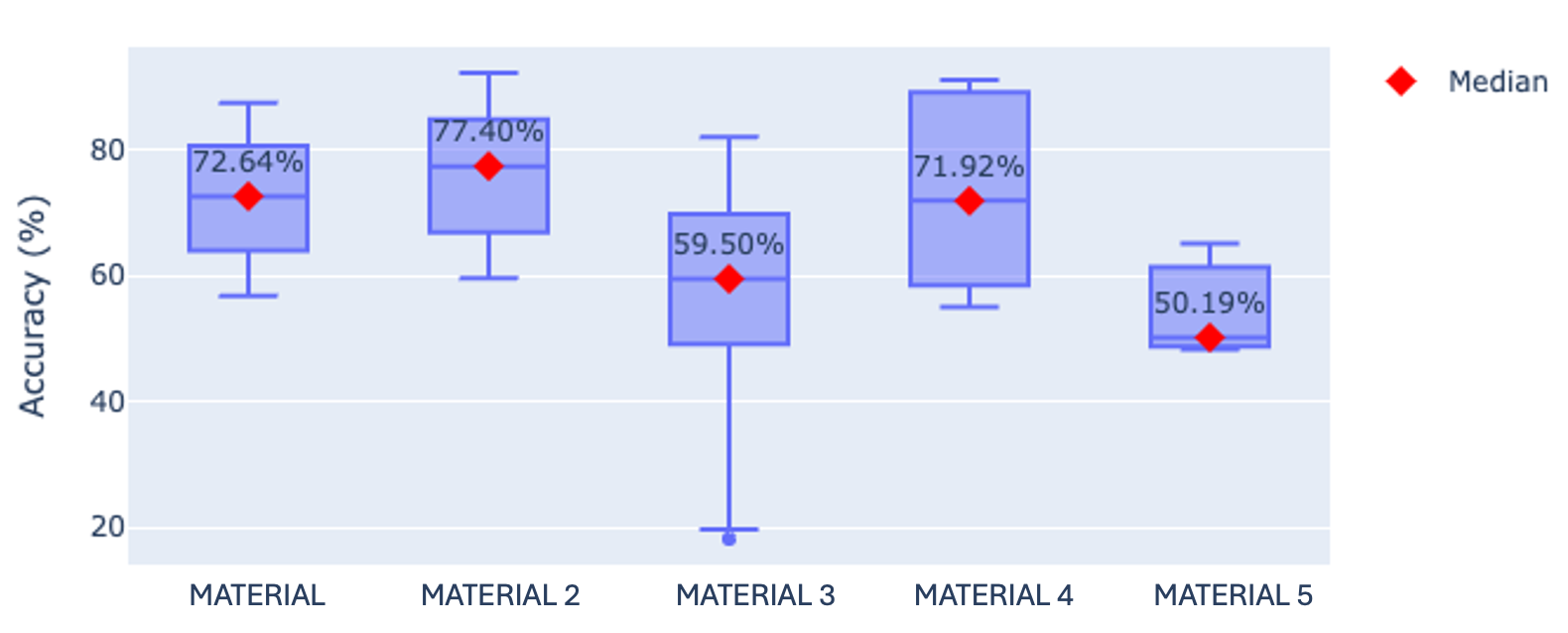
Graph 2: Overall accuracy per material group.
3. From Measurement to Diagnosis: Understanding Where Accuracy Is Lost
Beyond measuring overall accuracy, Predikt enabled the procurement team to pinpoint where inaccuracies originated across the cost chain. Because indexes, material prices, BOM structures, and finished good costs were all tracked within one platform, deviations could be traced back to their root cause.
In practice, this created clear diagnostic insights:
- When indexes were forecasted accurately but material prices were not, the issue lay in material-level assumptions or model structure.
- When material prices were accurate but finished good costs deviated, inaccuracies were traced to BOM, yield, or conversion assumptions.
- When both performed well, remaining deviations pointed to operational or logistics factors.
This transparency allowed the team to move from broad recalibration to targeted cost model improvement. Instead of questioning entire models, procurement could focus effort exactly where it created the most value—leveraging Predikt’s AI functions to optimize the weakest links while leaving reliable components untouched.
Accuracy tracking thus became a continuous value driver: not just validating models, but guiding where to invest time and analytical effort for maximum commercial impact.
4. Category-Level Insights Inform Targeted Action
A category-level view further refined priorities. Cost models for different materials showed median accuracies in the ~70–80% range with relatively tight distributions, indicating stable performance. In contrast, a few categories displayed wider spreads and lower median accuracy, highlighting where selective refinement could strengthen model reliability. This enabled targeted improvement efforts rather than broad, undifferentiated recalibration (See Graph 2).
5. Linking Accuracy to Commercial Impact
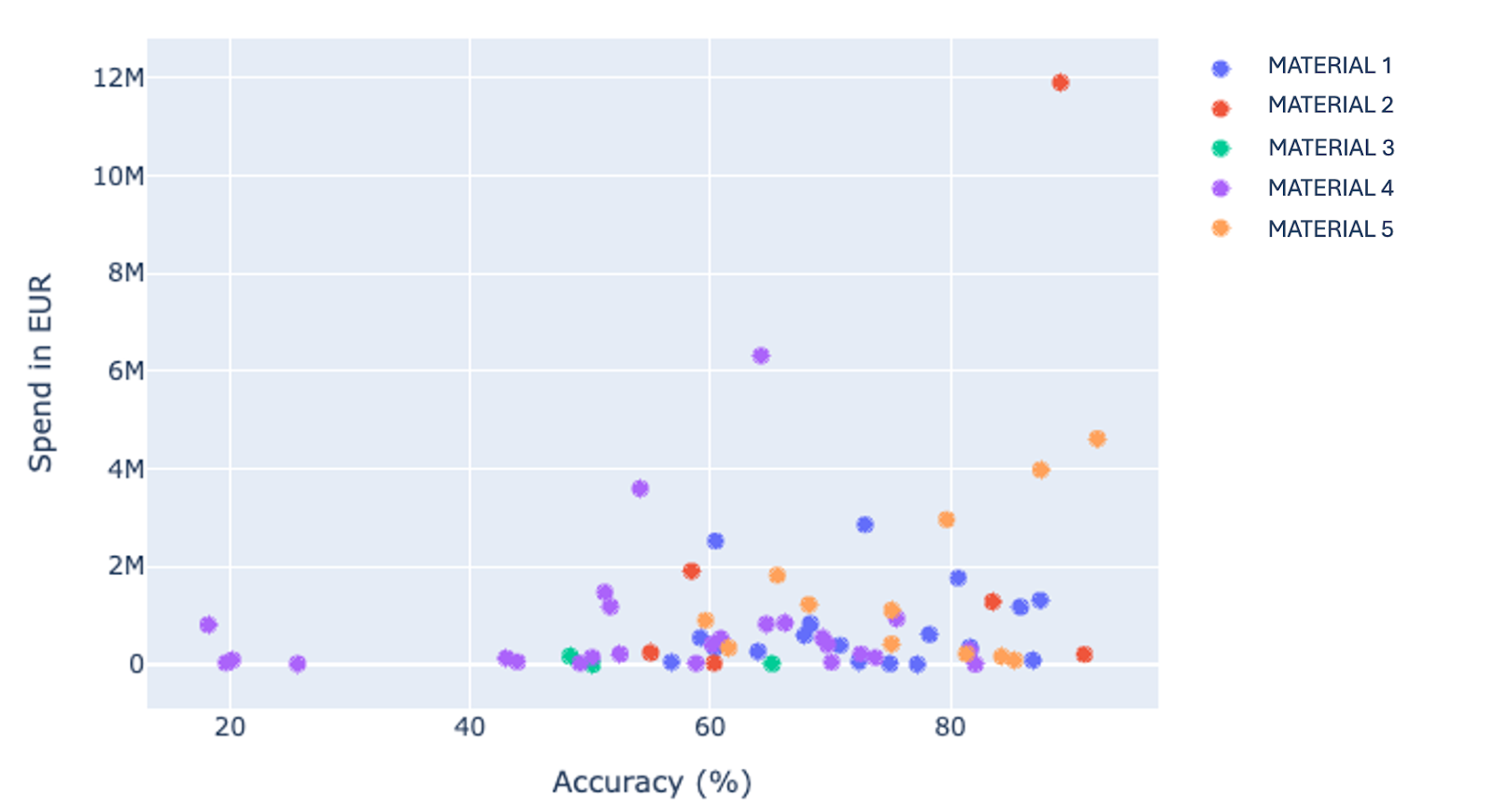
When cost model accuracy was analyzed alongside spend, the graph revealed where potential risk was concentrated. By plotting annual spend per material against accuracy, Predikt made it immediately clear which materials combined high financial exposure with lower-than-expected model accuracy.
This analysis allowed procurement leaders to quickly isolate the few high-impact outliers- materials that warranted closer scrutiny - while confirming that the majority of remaining deviations were confined to lower-spend items. Rather than averaging accuracy across the portfolio, the analysis highlighted exactly where attention was required, enabling targeted action on the materials with the greatest potential commercial consequence.
Graph 3: Accuracy versus spend impact.
Looking Forward: From Validation to Continuous Improvement
With a validated understanding of cost model accuracy and its commercial relevance, the organization is now positioned to:
- Selectively refine lower-accuracy models in specific material categories
- Improve indicator alignment with supplier cost structures and market realities
- Embed cost model accuracy as a recurring governance metric within procurement processes
Why This Matters Now
In volatile categories, forecasting isn’t about perfect prices - it’s about credible boundaries, explainable drivers and spend‑aware accuracy. Confidence comes from knowing where a model is strong, why it drifts, and how that maps to commercial risk. The organizations that win won’t chase every deviation; they’ll prove accuracy where it matters and fix the few that don’t. That’s how procurement moves from explaining after the fact to steering outcomes before they hit the P&L.




.png)
.png)